
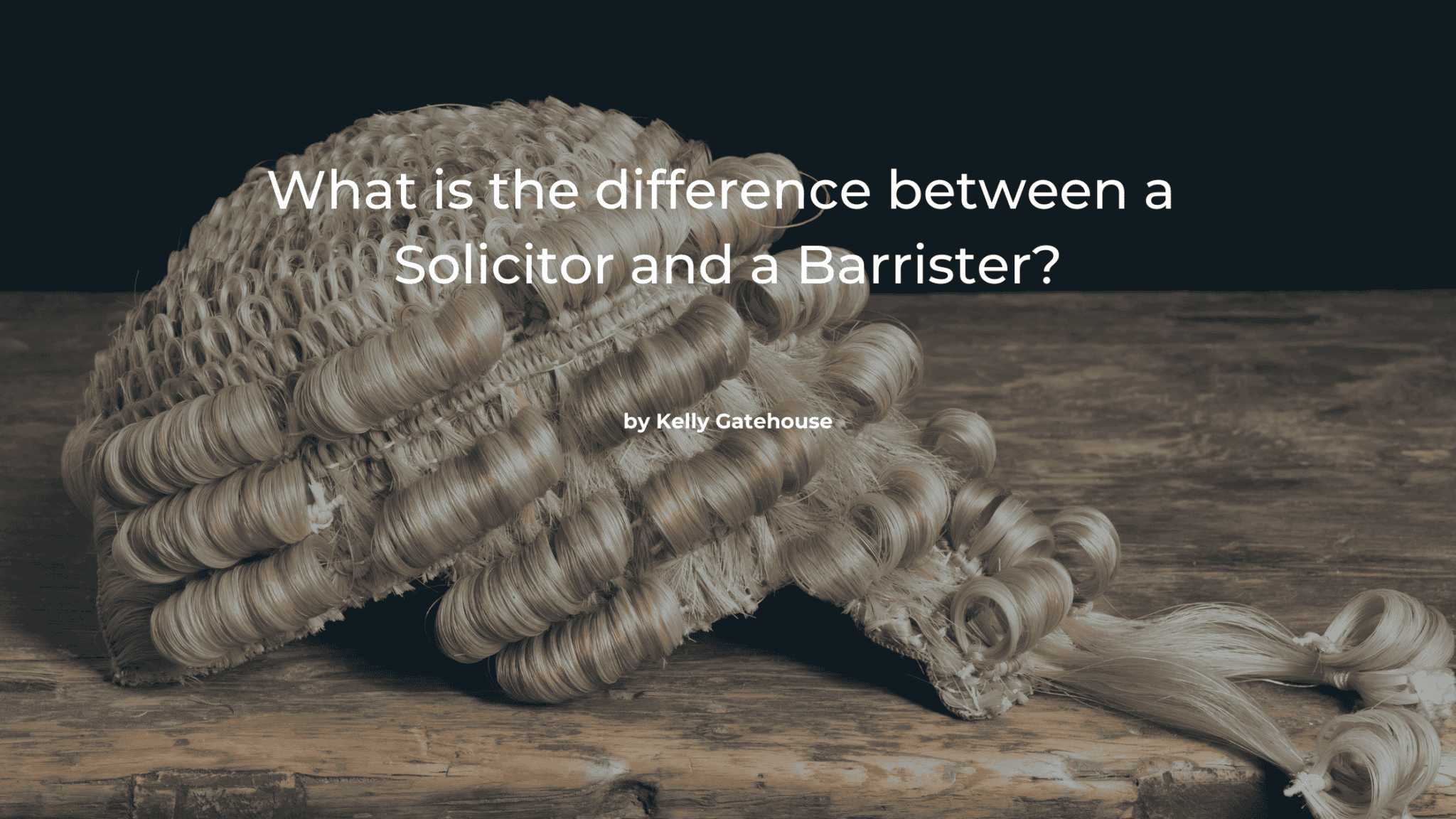
What is the difference between a Solicitor and a Barrister?

If you’ve ever needed legal help, you’ve probably heard the words solicitor and barrister – and wondered, “Wait, aren’t they both lawyers?” You aren’t alone! Many people use the terms interchangeably, but they describe different roles within the legal profession. Both solicitors and barristers are qualified lawyers – they just do different kinds of work and often team up to give you the best possible result. Here’s a simple breakdown of who’s who, what they do, and when you might come across each one. Why the confusion? The confusion comes mostly from the fact that both solicitors and barristers study law, give legal advice, and represent clients – but they do it in different settings. In Australia, including Queensland, the legal system is based on the English model, where the profession was traditionally divided into two branches. Solicitors handled client relationships and paperwork, while barristers specialised in court advocacy. These days, the line isn’t quite as strict as it used to be – but the distinction still matters. Understanding it can help you know who to turn to at each stage of your legal journey. What is a Solicitor? A solicitor is the lawyer most people deal with first. Think of them as your main point of contact – the person who manages your case from start to finish. Solicitors work directly with clients, giving advice, preparing documents, and handling the day – to – day progress of your matter. They can appear in court for many types of hearings, but they usually bring in a barrister if the case becomes complex or goes to a higher court. In the wills and estates space, solicitors commonly help with things like:
  • Preparing Wills, testamentary trusts, and enduring powers of attorney
  • Advising on estate planning to ensure your assets pass to the people you intend
  • Assisting executors with administering a deceased estate, including applying for probate or letters of administration
  • Advising beneficiaries about their rights and entitlements under a Will
They’re the ones you can call or email to ask, “what happens next?” or “Can you explain this to me in plain English?” Solicitors also play a key role in estate disputes. For example, they may assist if someone believes they have been unfairly left out of a Will or not adequately provided for. In an estate dispute, a solicitor will often:
  • Advise you about your rights and whether you have a valid claim, such as a family provision application
  • Gather evidence and information about the estate, the deceased’s wishes, and the financial circumstances of the parties involved
  • Communicate with the executor and other parties on your behalf
  • Prepare legal documents, court applications, and evidence needed to support your position
  • Negotiate or attend mediation to try to resolve the dispute without the stress and cost of a trial
  • Brief and work with a barrister if the matter proceeds to court
Estate disputes can be emotional because they often involve family relationships and long-standing expectations. A solicitor helps guide clients through the process with clear advice, practical strategy, and a focus on resolving the matter as efficiently as possible. In short, your solicitor is your legal organiser, advisor, and advocate – the person who understands your situation, explains your options in plain English, and helps move your matter forward. What is a Barrister? A barrister is a specialist advocate – someone who focuses on representing people in court and giving detailed opinions. Barristers are trained to:
  • Present arguments and question witnesses in court
  • Advise on the strengths and weaknesses of a case
  • Draft legal submissions for judges
  • Negotiate settlement and represent clients in mediations
Most barristers are self-employed and work from chambers – a group of individual offices shared with other barristers. They’re usually engaged (or briefed) by solicitors to assist in specific matters. They wear wigs and robes in higher courts, reflecting the traditional role of courtroom advocates – but their real skill lies in understanding the finer details of the law using them strategically in an argument. How do Solicitors and Barristers Work Together? In many legal matters, particularly those involving court proceedings, solicitors and barristers form a team. Here’s how it usually works:
  1. You engage a solicitor – they gather information, prepare your case, and act as your main contact.
  2. The solicitor briefs a barrier – when expert advocacy or legal opinion is needed, the solicitor provides the barrister with all the documents and background information.
  3. The barrister advises or appears in court – they argue the case, question witnesses, and help the solicitor plan the next step.
Behind the scenes, the collaborate closely. The solicitors know your personal goals and circumstances, while the barrister focuses on strategy and legal argument. Together, they bring both breadth and depth – practical guidance from your solicitor and technical precision form your barrister. When Might You See Both Involved? You’ll often see both solicitors and barristers working together in cases that are:
  • Complex or contested, such as family provision applications or large estates
  • Going to trial, especially in the District or Supreme Court
  • Involving detailed legal issues, like disputes over property ownership or interpretation of a Will
  • High stakes, where experienced advocacy is essential.
For example, in an estate dispute, your solicitor might prepare your documents, collect evidence, and attend mediation with you. If the matter heads to court, they’ll brief a barrister to present your case before the judge. You’ll usually meet the barrister before the hearing so they can explain the process and what to expect – your solicitor stays by your side the whole way through. The Benefits of Having Both While it might sound like doubling up, having both a solicitor and a barrister can save time and money in the long run. Here’s why:
  • Specialised expertise: Barristers are experts in courtroom advocacy and complex law; solicitors are experts in client care and preparation
  • Efficiency: Barristers can quickly spot key legal issues, saving time and resources
  • Stronger Strategy: You can get the combined insight of two legal minds working together
  • Better Communication: Your solicitor can “translate” technical advice into practical next steps.

It’s a bit like having a builder and an architect – they do different things, but together they create a stronger result. At the end of the day, both solicitors and barristers are there for one purpose – to help you navigate the law and achieve the best possible outcome. Your solicitor is your steady guide – the person who listens, explains and keeps your case moving. Your barrister is your courtroom voice – the one who argues fearlessly on your behalf. Together, they form a partnership built on trust, expertise, and advocacy. So, if your solicitor says, “We’ll brief a barrister to assist with this matter,” don’t be alarmed – it’s a sign you’re getting an experienced legal team ready to protect your interests, inside and outside a courtroom. If you’re dealing with a wills and estates matter – whether you’re planning your own Will, administering an estate, or navigating a dispute – understanding how solicitors and barristers work together can give you confidence in the legal process. At Nurture Law, our team works closely with experienced barristers to ensure our clients receive clear advice, strong representation, and practical solutions every step of the way. If you need guidance about a Will, estate administration, or an estate dispute, contact Nurture Law today to arrange a confidential consultation and find out how we can help.
Scroll to Top
Scroll to Top